

It’s 11:47 p.m. on a Tuesday. Your period app says you’re four days late, so it’s been marking you red every morning. You’ve already taken the hot shower. You have a heating pad on your pelvis. And you’ve fallen down a search hole that ends with one question: can sex make your period start? Here’s the honest version. An orgasm can’t start a period that isn’t already on its way. But if your lining is primed to shed and you’re genuinely late, the contractions from a strong orgasm can tip it over the edge, often within hours. What won’t happen: sex conjuring a period out of an empty cycle.
Only if it’s already on its way
The myth to kill first: that an orgasm squeezes your uterus like a tube of toothpaste and forces the lining out at any point in your cycle. It doesn’t work that way, and the reason matters. Your period isn’t a door that opens on demand. The lining has to be shedding-ready, and that’s driven by hormones, mainly the drop in progesterone at the end of your cycle. Contractions just help a lining that’s already letting go actually let go. Think of it as the last guest leaving a party and switching off the lights. The party has to be over first.
The other thing to clear up: bleeding after sex is not automatically a period. If you notice blood during or after sex, it can be cervical friction or a small tear from not enough lube, especially if you’re tense. That’s spotting, not a period. It doesn’t mean you’ve “started.” It means your cervix got bumped.

Photo: cottonbro studio / Pexels
Wait: which situation are you in?
Before you make this into a performance, check which version of “late” you’re in, because the advice changes.
Version one: you’re zero to three days late, your cycle is usually regular, and there’s no pregnancy worry. This is the only version where the nudge is plausible. Your lining is probably ready. A strong orgasm might be the last push.
Version two: you’re mid-cycle. Your period isn’t due for two more weeks. No orgasm on earth moves that lining. If you’re hoping to make a period arrive early for a trip or to “reset” your body, it won’t happen. Save the effort.
Version three: you’re asking because you’re scared. The condom broke, the pill was late, “we were careful but what if.” That’s a different question entirely. An orgasm can’t resolve it. A test can. Take the test before you try anything that involves more sex.
Version four: you’re late because this is your pattern. Irregular cycles from stress, PCOS, or a recent change in medication don’t get solved by a session. If the pattern is new, or the lateness is extreme, that’s a clinician conversation, not a night move.
One pre-move before anything else: check your app’s trend from the last three cycles, not today’s prediction. Apps guess. Then, if there’s any chance of pregnancy, test first. Then warm up. Heat increases blood flow to the pelvis, so a bath before the attempt is part of the mechanics, not a spa bonus.
What an orgasm actually does to your uterus
Plain anatomy, because the mechanism is the whole story. Your uterus is a muscle. Near the end of a cycle, when progesterone drops, the lining (the endometrium) starts to loosen and shed. An orgasm releases oxytocin, which makes the uterus contract. These are the same cramps you feel on day one of your period. Those contractions can help the loosened lining detach and move down and out.
This is also why you’ll hear people say an orgasm helps with period cramps. That’s real. It’s the same mechanism, and it works in both directions: cramps get soothed by the release, and a ready lining gets tipped over the edge.
Sex adds a second route: prostaglandins. Semen contains prostaglandins, which can soften the cervix and cause uterine cramping. This is where the folk remedy comes from, the one that says a partner has to finish inside. Here’s the truth: the amount of prostaglandin that actually crosses the cervix is small, absorption is slow, and timing is everything. If your lining is ready, it might add a nudge. If it’s not ready, no amount of semen changes anything. It’s a backup, not a button.
One more fact that matters for the mechanic: the strongest contractions usually follow a clitoral orgasm. Internal-only orgasms are less reliable for most women. If you want the most uterine activity, your clitoris is the main event.
Orgasms that actually count
Solo first, because this works without a partner and without the awkwardness of explaining yourself. The goal isn’t the quickest orgasm. It’s the fullest one. Go for your clitoris, with a vibe or your hand, and build slowly. Sustained rhythm matters more than pressure: same pace, no pausing to check whether it’s “working.” Aim for 15 to 20 minutes of building to one good orgasm, then let the after-contractions happen. Many women feel a cramp or two about ten minutes later. That’s the mechanism announcing itself.
Partner version. Start external, the same way. When you’re close, if you want internal stimulation, have them add one or two fingers, palm up, curved toward your belly button, against the front wall of the vagina. Slow, not a jackhammer. The angle matters more than depth. Your clitoris stays the main event, because for most women it’s the part that reliably produces the kind of orgasm that makes the uterus contract.
And if the period does arrive mid-attempt: sex during your period is fine. Lube helps, put a towel down, and the oxytocin release will probably make the cramps better.
Five moves that will only waste your night
1. The one-rush plumbing trick. A rushed, tense orgasm “to get things moving” is still an orgasm, but the contractions are weaker and the finish is thinner. Your uterus does not respond to bribery, and it definitely doesn’t respond to impatience.
2. Insisting he finishes inside for the prostaglandins. The dose is too small and absorption is too slow to count on. Also, if you’re late because you might be pregnant, this is the opposite of what you want. The math doesn’t even math.
3. Cervix-bumping positions. Deep thrusting against the cervix doesn’t trigger a period. It triggers pain and bleeding from irritation that looks like a period and isn’t. That’s how you end up spotting, not starting.
4. Pushing through pain. Cramping after an orgasm is normal. Sharp pain during is a stop signal, not a sign of progress.
5. The multiple-orgasm marathon. You can exhaust your pelvic floor and still get nothing. The mechanism is one solid release with real after-contractions, not five tired ones that are each half as strong.
And a bonus that belongs in any fail bank: treating any blood as success. If you spot during or after sex, you haven’t started your period. You’ve irritated your cervix or a small tear. It won’t count, and it doesn’t move your timeline.
You already tried. Now what?
So you did it. The orgasm happened, the sex was fine, and 12 hours later there’s still no period. Welcome to the other side of the experiment. First: don’t repeat it tonight. The window for the trigger to work is 12 to 36 hours. If nothing shows within 48, the trigger wasn’t the missing piece.
There are two ways this already goes sideways, and both have exits.
Sideways version A: you spotted afterward, thought you’d “started,” and then the bleeding stopped. Now you’re panicking that something’s wrong. Read the fail bank above: friction spotting. It stops. It’s not a period, and it doesn’t mean you’re broken. It means your cervix got knocked.
Sideways version B: you went into the session with an unspoken agenda, your partner could feel it, and now there’s a weird silence about why you were so focused. That’s a conversation, not a relapse. If pregnancy is possible and you haven’t tested, test now. That’s the real fork: if the test is positive, more orgasms don’t change anything. If it’s negative, you can relax enough to let your body do its actual job.
What to say to the person sharing your bed
If you’re doing the partner version, the experiment needs a script, because going into it with a hidden agenda turns sex into a job interview. Say something closer to this:
“I want to try something, and I need you to not take this personally. It’s about my body, not your performance. Here’s what helps: start slow, stay where I put your hand, and don’t ask if it’s working. If I get my period, great. If I don’t, we tried, and I’ll go from there. Either way, nothing you did was wrong.”
That last sentence is the care-versus-ego line. A partner who stays curious and follows your hand is a keeper. A partner who turns your experiment into their scoreboard is not your problem to fix; the script already told them it’s not about them. Their ego is theirs to manage.
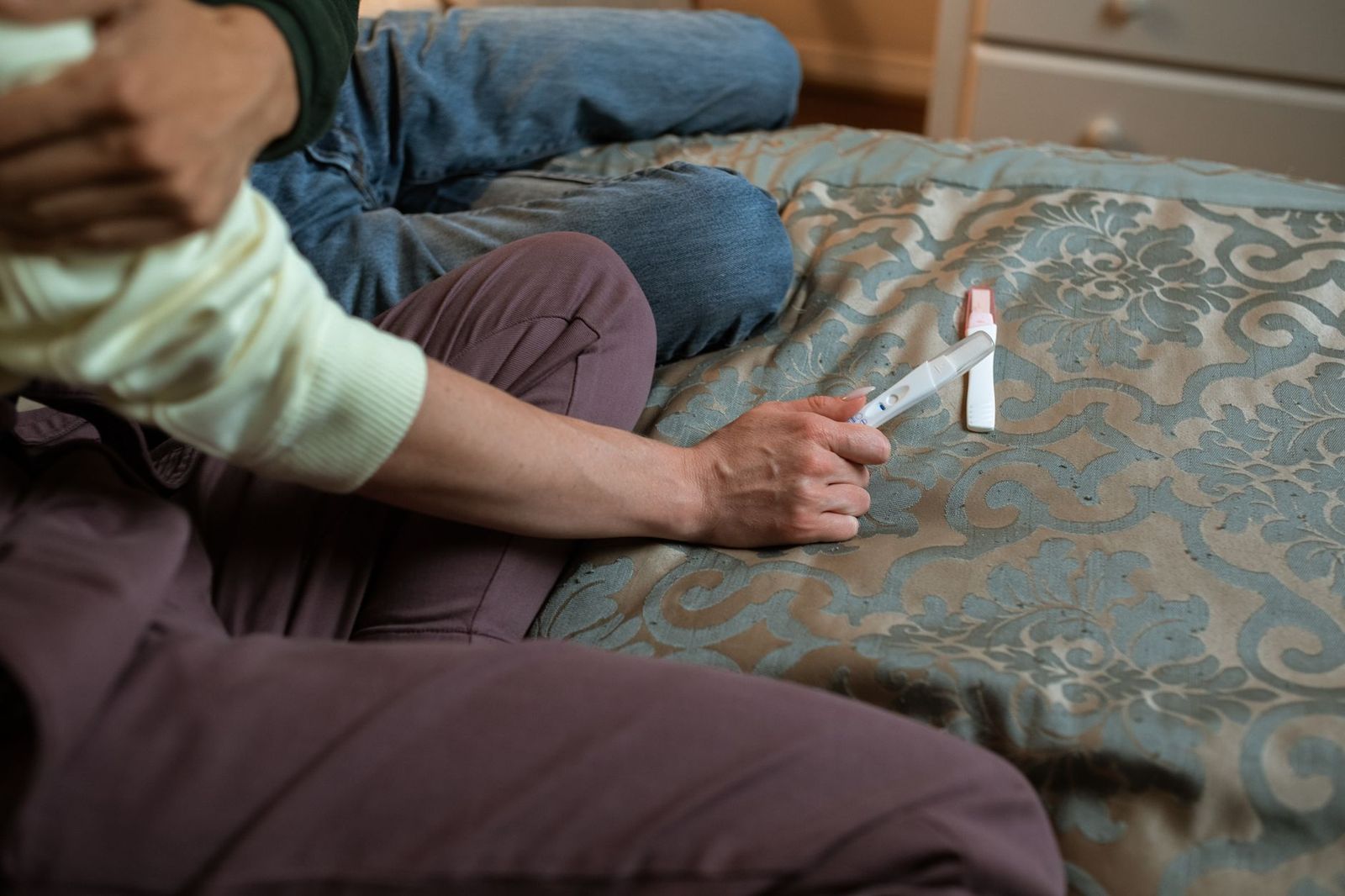
Photo: RDNE Stock project / Pexels
When to stop doing this yourself
There are real reasons to hand this to a clinician. Sharp or one-sided pelvic pain. Bleeding after sex that’s bright red, heavy, or genuinely painful rather than light spotting. Sixty-plus days without a period when you know you’re not pregnant. Or a positive test.
If pregnancy is a possibility, a test answers more than an orgasm can, and if you don’t want to be pregnant, you need a real conversation with a clinic, not a DIY period. One sentence of straight talk: if any of the above sounds like you, book the appointment. The appointment is the next step, and taking it is not giving up.
One thing to try tonight
Practice one variable. Don’t run the whole protocol. Tonight’s plan: phone on the charger across the room, a 15-minute timer, zero expectations. One session where the goal is your pleasure, not your period. If it ends with an orgasm and a cramp, great. If it ends with nothing but a “huh, that felt good,” that’s data too.
Write down two things in the morning: whether any blood showed up, and how the attempt felt before the result mattered. One of those tells you about your cycle. The other tells you where to start next month. Both of them count.
Either way, you’re one step closer to an answer than you were at 11:47. If the period comes, you know your body responds to a full release when it’s ready. If it doesn’t, you know the trigger wasn’t the missing piece, and the next move is a test or an appointment. You haven’t wasted the night. You ran a clean experiment on a body that’s doing its best, and now you have data. That’s not nothing. That’s how you start.