
The myth first, because it is doing the damage
Most people who search “G-spot vs clitoral orgasm” are not curious, they are on a performance goal: they have been told that a vaginal orgasm is the “real” one, they have spent months or years trying to get there, and they are quietly sure they are broken. So the first thing to say, as plainly as possible: in the large majority of women, every orgasm is a clitoral orgasm. The ones that feel “internal” are still clitoral, they are just the internal part of the clitoris being reached from inside the vagina.
That is not a downgrade. It is the opposite. It means the hardware was never missing, the map was wrong.
The second myth is the G-spot itself. It is not a button, not a spot you can miss like a stain, and not a magic bean that fixes everything. The most accurate way to think about it: the internal body of the clitoris wraps around the front wall of the vagina, and the area people call the G-spot is where that tissue is closest to the surface, roughly one to two inches inside, on the front (belly-side) wall. Stimulate that area with enough pressure, and you are stimulating the clitoris, just from the other side.
The anatomy in plain words
The clitoris is not the small external nub. The nub, the glans, is the visible tip of a much larger internal organ: two arms of erectile tissue (the crura) that run down along the vaginal opening, and two bulbs that wrap around the urethra and the front wall of the vagina. When you are aroused, that whole structure swells, which is why the front wall of the vagina changes shape and why internal stimulation can suddenly start working in a way it did not five minutes earlier.
The G-spot is the part of that internal structure you can reach through the front vaginal wall. It is not a separate organ with a separate nerve supply. It is the same tissue, approached from inside. That explains the two most confusing experiences people report: a partner’s fingers can “find” it one night and miss it entirely the next, and it does almost nothing until arousal has already started. Neither of those is a mystery once you know the anatomy. The tissue has to be swollen before it is reachable, and the exact angle changes with your arousal and your position.
What each one actually feels like
It helps to know what you are aiming at, because the two routes do not feel the same and the difference is useful feedback.
External clitoral stimulation builds in a familiar arc: localized, precise, rising fast, and finishing in a sharp, concentrated release. Internal stimulation, when it works, feels less like a point and more like depth: a fuller, slower building pressure, sometimes described as a wave or a pulling sensation deep behind the pubic bone, and a release that spreads rather than snaps. The combination feels like both at once, which is why people who find it describe it as a different category entirely rather than a stronger version of either.
Neither is better. They are different instruments in the same kit, and which one you want changes by session, by mood, by how aroused you already are. The only wrong answer is the one you chase because you think it is the one you are supposed to have.
What to actually try, in order
The job order matters more than any single move. Do not start internal. Start where the wiring is densest and easiest, then decide if the internal route adds something you want.
Step one: the external map, solo, no goal. Five minutes, clean hands, lube if you want it. Find what pressure, pace, and side of the clitoris works when nothing is riding on it. This is not foreplay for the main event. It is calibration, and most people skip it, which is why they cannot tell a partner anything useful later.
Step two: add the internal route. Once you are aroused (not before, it genuinely will not work before), slide one or two fingers in, palm up, and curl them toward your belly button, as if you were making a “come here” motion against the front wall. The area you want is one to two inches in, and the sensation is not a light touch. Most people describe it as needing firm, steady pressure, the kind you would not use on the external clitoris. Move slowly, keep the pressure constant, and let your body tell you whether this is a “yes, more” or a “that is just pressure, nothing else.”
Step three: combine. For most people, internal stimulation alone is not enough, and external plus internal is where the “full” sensation shows up. One hand or a toy internally, the other or a second toy externally, or a partner who can do both. The combination is the instrument, not either half on its own.
Positions that change the angle. Lying on your back with knees bent shortens the front wall. On all fours changes the angle of everything and is often how people first feel it. A pillow under the hips tilts the pelvis. If it feels like nothing, change the geometry before you change the pressure.
What usually fails, named so you can skip it
- Starting too early. Before arousal, the internal tissue is not swollen, so the front wall feels like nothing. This is the most common “the G-spot is a myth” story, and it is a timing problem.
- Light touch. The external clitoris wants precision, the internal route wants pressure. Using external-style light stroking internally reads as nothing.
- Racing to the goal. The internal route takes longer to wake up. Twenty minutes in, the same touch that did nothing at minute five can be overwhelming. Quitting at minute ten is not evidence.
- Fingers too short or too straight. The curve matters. Straight fingers hit the back wall; curled fingers hit the front wall. If you cannot curl, that is what curved toys are for.
- The performance goal itself. Trying to “achieve” a vaginal orgasm to prove something makes the arousal shallower, which makes the internal route harder, which feeds the story that you are broken. The goal is the failure mode.
- No lube, dry hands, dry anything. Internal friction without lube reads as discomfort or pain, and pain kills arousal instantly.
- Abandoning the angle the moment it feels like nothing. The internal route is positional; a two-inch shift in the curve or a change from lying flat to a pillow under the hips can be the entire difference between pressure and sensation. Giving up after one angle is not a test of whether it works, it is a test of one angle only.
If you already faked it, or the toy is in the drawer
The mid-mess fork is real and it has a clean exit. If you have faked orgasms with this partner, you do not need a confession scene. You need one true sentence the next time you are in bed together: “I want to try something different with you, and I might need to show you what I like.” That is not an admission, it is an invitation, and it changes the frame from “she is broken” to “we are learning her.”
If you bought a toy that sits in a drawer because it was too intense, too weak, or just confusing: the toy is not the problem, the job match is. A strong air-pulse toy on a sensitive external clitoris is a common mismatch. The fix is not to power through, it is to use it at its lowest setting on the side of the clitoris, or to switch the job entirely (see below).
What to say to a partner, and how to read the response
The partner script, said plainly:

Photo: Yan Krukau / Pexels
“The part that works best for me is on the outside, and I want to show you how. Also, when we go internal, I need firm, steady pressure toward my belly button, and it takes a while to warm up. Can we take that slow?”
Watch what happens next. A partner who engages with the instructions, asks a follow-up, or simply does what you said is showing care. A partner who sighs, speeds up, or circles back to what works for him is showing ego, and that information matters more than the orgasm itself. You can teach technique in a season. You cannot teach someone to care whether it worked.
When it is not a technique problem
Pain is not a challenge. Sharp pain, burning, or bleeding during or after internal stimulation is a reason to stop and see a clinician, not to try another angle. The same goes for a persistent feeling of a lump or pressure that does not change with arousal. If penetration has always hurt, that is also worth a real conversation with a gynecologist, because “just relax” is not a treatment and chronic pain deserves a workup, not more lube.
The honest tool path, because this is where a toy actually helps
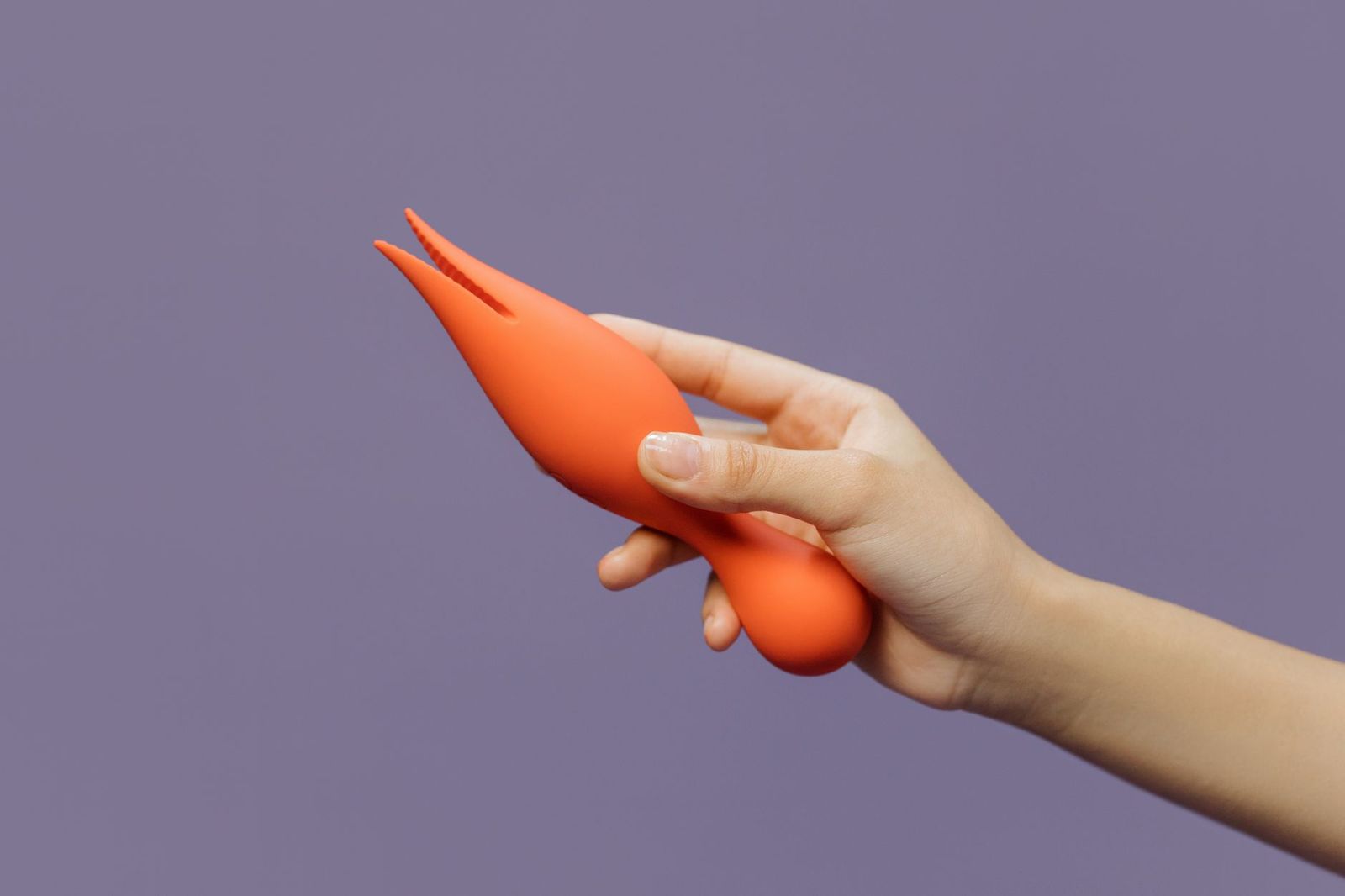
If the internal route feels good but your fingers cannot keep the pressure and angle steady, a curved toy is the honest instrument. That is its job: it holds the curve you cannot hold with your hand, and it keeps the pressure steady for as long as you need. A short, curved toy worn or held against the front wall, plus external stimulation, is the setup most people describe as the “both at once” experience.
If the external route is the one that works and you want hands-free, an air-pulse toy is the honest instrument for that job. It does not vibrate broadly, it pulses against the clitoris precisely, which is why it works for people who find regular vibrators numbing.
Two honest labels: we have not tested products yet, so this is anatomy-based guidance, not a review, and there is no “correct” orgasm to buy your way into. A toy is worth trying when the job is mechanical, which is exactly what both of these are.
Practice with one variable, then leave it alone
Here is the whole practice plan, and it is deliberately small. This week, one 15-minute solo session. Change exactly one variable from your usual routine: add the internal route, add the combination, or add lube if you never use it. No goal, no timer for coming, no score. The point is data, and the data is only readable when you change one thing at a time.
If it works, you now know one more thing to bring to a partner. If it does nothing, you know that variable is not yours, and that is also data. Either way, you are no longer a woman who is broken, you are a woman who is mapping her own body, and that is the actual destination the whole search was pointing at.

Photo: LayG Traveller / Pexels